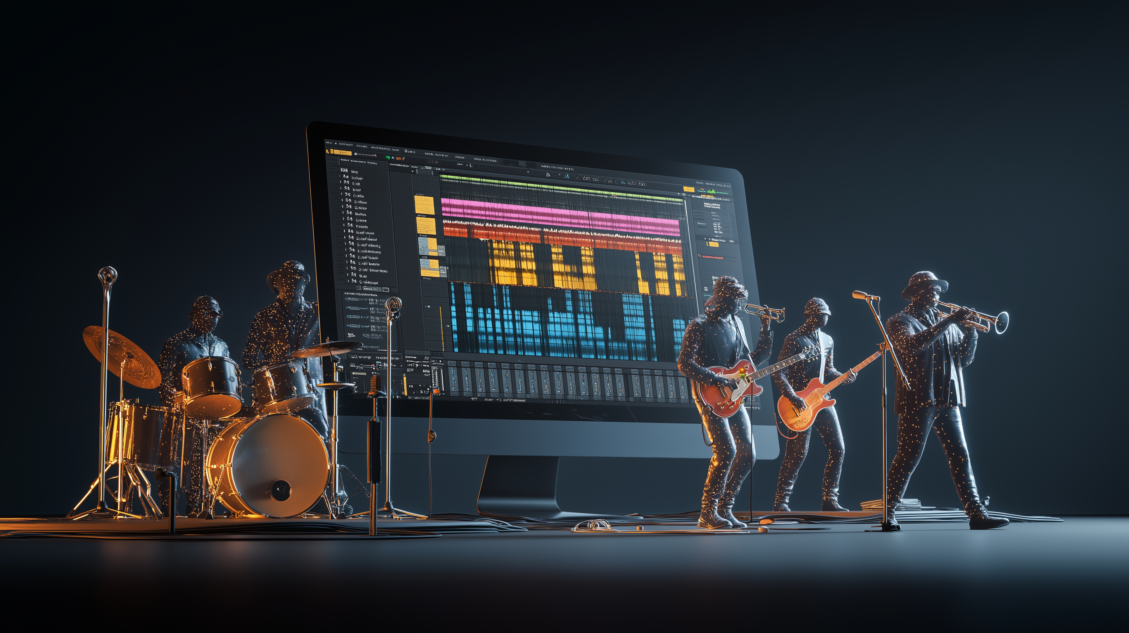
A studio that records only music usually develops its workflow around songs, albums, and artistic performance. Timing can be flexible. Creative exploration is part of the process. A take may be repeated because the emotion feels slightly wrong, not because anything technical failed. Sound choices are often shaped by mood, identity, and genre.
That logic begins to change when the same studio also handles video projects.
Once a studio starts working not only with artists, but also with branded videos, tutorials, interviews, ads, podcasts, social media clips, or other visual content, recording can no longer be approached as a single-purpose craft. The studio is still dealing with sound, but the function of that sound becomes more varied. Music is no longer the only center of attention. In many sessions, audio must support an image, a message, a narrative structure, or a delivery deadline.
This changes the recording process in more ways than it first appears.
The studio stops thinking only in tracks and starts thinking in formats
When a studio works only with musicians, the default unit of work is usually the track. Even when the project is larger, such as an EP or album, individual songs remain the main reference point. Recording decisions are built around arrangement, performance, and sonic character.
But studios that also serve video clients begin to think in formats. A session may no longer be about a single song from start to finish. It may involve intro music, voiceover, background layers, short stingers, dialogue cleanup, alternate edits, and audio versions for multiple platforms. The studio starts planning not just what sounds good, but where that sound will live.
This shift has practical consequences. Engineers and producers must think about duration, edit points, spoken-word clarity, sync behavior, and delivery requirements much earlier in the process. A piece of music written for a visual project may need several versions from the start: full-length, short edit, no-vocal version, or loop-friendly segments. That is very different from recording a song purely as a listening experience.
The result is a broader mindset. The studio becomes less attached to a single final mix and more aware of how audio must adapt across media contexts.
Performance is still important, but usability becomes part of quality
In music recording, performance often defines the value of a take. A technically imperfect vocal may still be the right one if it carries the right feeling. A guitar part may stay slightly loose because the groove feels alive. The recording process leaves room for human irregularity.
Video work introduces another standard. In many video-related sessions, usability becomes part of quality. A voiceover needs consistent tone and clean delivery. Dialogue must remain easy to understand under background music. Audio transitions must support editing rather than complicate it. Even when the material is expressive, it often has to function inside a more controlled structure.
This influences the way sessions are run. The studio may use stricter file organization, more precise take labeling, clearer version control, and more deliberate microphone choices depending on whether the content is intended for music release or picture-based editing. Recording is no longer judged only by artistic feel. It is judged by how efficiently the material can move into the next production stage.
That does not make the work less creative. It makes the definition of success more layered.
The room must serve different acoustic priorities
A studio that works with both artists and video projects also begins to hear the room differently. In purely musical work, some acoustic character may be desirable. Certain reflections may flatter a voice or make an instrument feel larger. A room can become part of the sound.
Video-related work often pushes in another direction. Spoken-word recording usually benefits from more control, more dryness, and fewer room signatures. Audio that must sit under dialogue or match visual cuts often needs tighter capture and easier editing. This means the same studio may need flexible acoustic behavior rather than one fixed sonic identity.
That changes both room setup and recording habits. Engineers may build more modular spaces, rely more on movable treatment, and think more carefully about how quickly the room can shift from one purpose to another. A vocal booth that works for sung performance may need different treatment or mic placement when recording narration. A live room that sounds exciting for instruments may be less useful for precise spoken content.
As a result, the studio starts valuing adaptability as much as character.
Scheduling becomes more structured
Music sessions often stretch and breathe. Artists need time to warm up, experiment, change arrangements, or follow an unexpected idea. Even in professional environments, creativity does not always move in straight lines.
Video projects usually introduce tighter scheduling logic. Clients may be working toward a campaign date, an edit deadline, or a release calendar linked to other teams. The audio part is often just one stage in a larger pipeline. Delays in recording can affect filming, editing, publishing, or approval.
When a studio serves both worlds, its workflow becomes more disciplined. Session planning has to account for setup time, retakes, edit handoff, and asset delivery. Communication becomes more exact. File naming matters more. Export structures matter more. Backup habits matter more. The studio cannot rely only on creative momentum. It needs operational consistency.
This often changes the internal culture of the studio. The best hybrid studios do not abandon the flexibility artists need, but they do build stronger systems around it. They learn how to protect creative space without letting the process become chaotic.
Audio decisions become more contextual
One of the biggest changes in a mixed studio environment is that sound choices become more context-dependent. In music-only recording, decisions are often driven by genre, emotion, taste, and reference tracks. The main question is whether the sound serves the song.
In video-related production, the sound must serve a larger structure. A track that sounds rich on its own may be too dense under dialogue. A dramatic low end may not translate well across small speakers if the content is mainly watched on phones. A vocal texture that feels intimate in a song may feel distracting in branded content. Even silence is used differently.
This teaches the studio to think in layers of purpose. Music made for release can occupy space boldly. Audio made for picture often needs to leave space intentionally. The engineer becomes more sensitive not only to sound quality, but to sonic behavior inside different media environments.
That awareness often improves the studio’s music work too. Once a team becomes used to thinking about translation, speech clarity, and functional arrangement, it may bring more discipline into song production without making the result sterile.
Collaboration becomes broader and less artist-only
Studios that work with artists usually collaborate with singers, instrumentalists, producers, and sometimes managers. The chain of decision-making remains close to the music itself.
In video projects, the studio may also work with directors, editors, content strategists, brand teams, or agency contacts. This expands the communication model. Feedback may arrive from people who are not thinking like musicians at all. They may care about message clarity, pacing, emotional tone, or brand alignment more than sonic nuance.
That changes how the studio presents options and explains decisions. Technical skill alone is not enough. The team has to translate audio decisions into language other collaborators can use. It has to understand why a sound works not only musically, but narratively or commercially.
This makes the studio more versatile, but also more demanding as a workplace. It must speak both creative and production language.
A hybrid studio becomes less romantic and more resilient
There is a romantic image of music recording as a self-contained world built around microphones, takes, and artistic discovery. That world still exists. But when a studio also works with video projects, the process becomes less isolated from the realities of modern media production.
The studio starts thinking about deliverables, platform behavior, editing needs, turnaround speed, spoken-word intelligibility, and multi-use audio assets. It becomes more systematic. More flexible. More aware that sound is not always the final destination. Sometimes it is part of a larger content ecosystem.
This does not weaken the music side of the work. In strong studios, it often sharpens it. Engineers learn to move between emotion and precision. Producers learn to build sounds that are expressive but controllable. The whole team develops a clearer understanding of what audio must do in different contexts.
That is the real shift. A studio working with both artists and video projects stops treating recording as one fixed craft. It becomes a place where sound is shaped not only for listening, but also for function, image, timing, and use. In today’s production environment, that kind of versatility is no longer secondary. It is part of what makes a studio sustainable.